
The Renters’ Rights Act has changed the private rental landscape in England. For Loss Adjusters and insurance claims teams, it may prompt a fresh look at traditional private rentals as alternative accommodation. But is a traditional rental really the best option when a policyholder needs a home quickly?
The question isn’t which accommodation has the lowest rental cost. It’s which solution offers the best overall value once the full cost, administration and policyholder experience are counted.
This guide is for
Overview
- The Renters’ Rights Act: a changing landscape for alternative accommodation
- The practical challenges of traditional private rentals
- Why serviced apartments can offer a more effective solution
- Looking beyond the property: policyholder welfare
- The real cost of alternative accommodation
- What should Loss Adjusters consider?
- Choosing the right alternative accommodation partner
- The best temporary home is about more than the rental agreement
- Enquire now

1The Renters’ Rights Act: a changing landscape for alternative accommodation
The introduction of the Renters’ Rights Act has changed the private rental landscape in England, bringing new rules around tenancy agreements, fixed terms and how tenancies can be ended.
What changed on 1 May 2026 Private tenancies in England
- Rolling tenanciesFixed terms are replaced by periodic tenancies with no set end date.
- Two months’ noticeTenants end a tenancy by giving two months’ notice.
- Rent in advance cappedLandlords can’t ask for more than one month’s rent upfront.
- No ‘no-fault’ evictionsSection 21 notices have been abolished.
For Loss Adjusters and insurance claims teams, these changes may prompt a fresh look at traditional private rentals as an option for alternative accommodation, particularly where a property needs to be secured for several weeks or months.
On paper, the move towards rolling periodic tenancies may appear to offer greater flexibility. However, the ability to end a tenancy more easily does not necessarily translate into a straightforward temporary housing solution.
When a policyholder is displaced following a fire, flood, escape of water or other insured event, the priority is not simply securing a property. It is finding somewhere suitable, quickly, with the right level of support and as little additional disruption as possible.

2The practical challenges of traditional private rentals
Traditional private rentals can be a suitable option in certain circumstances. However, when used for insurance alternative accommodation, there are several practical considerations that can make them less straightforward than they initially appear.
Application processes and time to occupancy
Securing a traditional rental can involve several stages before the policyholder gets the keys.
Traditional rental
- 1Tenant referencing and credit checks
- 2Identity and affordability checks
- 3Landlord or letting agent approval
- 4Deposit and initial rental arrangements
- 5Contract negotiation and tenancy documentation
- Move in
Serviced apartment
- 1Booking confirmed
- Move in to a furnished home
These requirements can introduce delays, particularly when a policyholder needs to leave their home urgently.
Following a major property incident, families may already be dealing with the emotional and practical consequences of displacement. Having to complete a rental application, provide supporting documents and wait for approval can add another layer of uncertainty at an already difficult time.
For claims teams, this also means additional coordination before the policyholder can move into suitable accommodation.
The responsibilities of managing a temporary home
A traditional rental generally places responsibility for the property with an individual landlord or their appointed managing agent. The level of service and responsiveness can vary.
If an essential appliance breaks down, heating stops working or a maintenance issue arises, the policyholder may need to report the problem and wait for the landlord or managing agent to arrange a resolution.
The heating stops working. Who does the policyholder call?
Traditional rental
An individual landlord or their managing agent. How quickly it’s resolved depends on who that is.
Serviced apartment
A dedicated property management contact, with a clear procedure for reporting and resolving issues.
For someone who has already lost the use of their home, the last thing they need is uncertainty over who to contact or when an issue will be resolved.
The suitability of alternative accommodation should extend beyond the condition of the property on arrival. It should also consider how effectively the accommodation is supported throughout the stay.
The hidden costs of setting up a temporary home
The advertised rental price rarely tells the whole story.
Traditional rental: beyond the advertised rent
- Advertised rent£
- Gas, electricity and water+
- Council tax+
- Broadband and internet+
- Furniture, household equipment and appliances+
- Cleaning and ongoing maintenance+
- Setting up and closing household accounts+
- The real cost of the arrangement?
Depending on the property and agreement, additional arrangements may be required for each of these. They can be particularly difficult to manage when the duration of a claim is uncertain.
Where expenses are covered by the insurer, separate payments, invoices and receipts may need to be processed and reconciled. This can create additional administration for the policyholder, Loss Adjuster and claims management team.
There is also the consideration of setting up and closing household accounts, arranging services and managing final bills when the policyholder is ready to return home.
What initially appears to be a lower rental rate may therefore represent a considerably more complicated accommodation arrangement.

3Why serviced apartments can offer a more effective solution
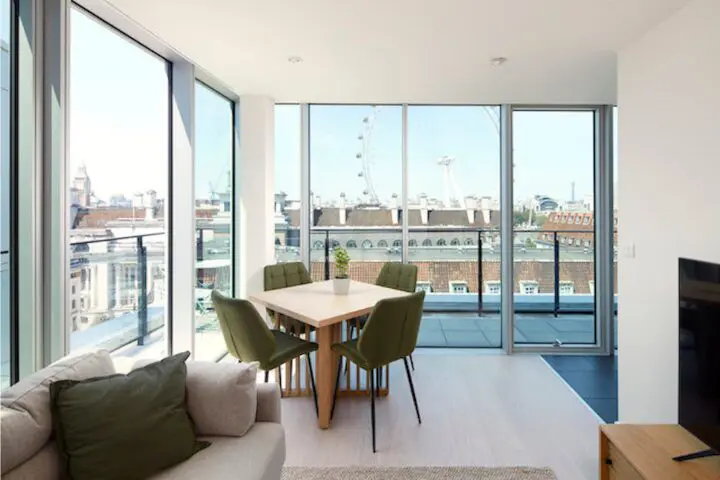
Serviced apartments offer a different approach to temporary housing. Rather than arranging an unfurnished or partially furnished property and organising the household essentials separately, policyholders can move into an accommodation solution that is already set up for everyday living.
For insurance claims, this can provide several practical advantages.
A ready-made home, without the set-up
Serviced apartments are furnished and equipped, typically including:
- A fully equipped kitchen and essential appliances
- Furniture, beds and household furnishings
- Kitchenware, crockery and everyday essentials
- Utilities and internet, generally included within the agreed rate
This means policyholders do not have to arrange multiple household services or organise the essentials before they can settle in.
For claims teams, having accommodation costs consolidated into one agreed rate can also make budgeting, approvals and invoice management more straightforward.

Flexibility when reinstatement works take longer
One of the biggest challenges in insurance accommodation is uncertainty around the length of stay.
A repair programme may initially be expected to take six weeks, only for structural issues, specialist works or unforeseen delays to extend the reinstatement period.
Traditional rental arrangements can involve additional considerations when a tenancy needs to end or the property needs to be retained for longer.
Serviced apartments can offer greater practical flexibility, with extensions often possible subject to availability and agreed terms.
If the anticipated return date changes, the accommodation provider can work with the booking agency and claims team to explore an extension or alternative property where necessary.
This can help avoid the additional disruption of finding and securing an entirely new home during an already stressful period.
Professional management and ongoing support
Serviced apartments are generally supplied through professionally managed accommodation operators, providing a clearer structure for dealing with property-related issues.
Depending on the operator and service arrangement, this can include:
- A dedicated property management contact
- Support with maintenance and operational issues
- Assistance with appliance or equipment problems
- Scheduled housekeeping, where included
- Clear procedures for reporting and resolving issues
For the policyholder, knowing who to contact when something goes wrong provides reassurance.
For the Loss Adjuster, it means there is an established route for escalating issues rather than having to coordinate directly with an individual landlord.
This distinction becomes particularly important when accommodation is required for several months or when multiple policyholders need to be housed simultaneously.

4Looking beyond the property: the importance of policyholder welfare
Alternative accommodation should never be viewed as simply finding an available property within an agreed budget.
Being displaced from home can have a significant impact on people’s everyday lives. Families may need to maintain school routines, older residents may have specific accessibility requirements, and individuals working from home may need suitable space and reliable internet.
The accommodation must work for the person living in it, not just satisfy the immediate requirement to provide somewhere to stay.
Serviced apartments can offer several advantages in this respect:
-
Space to maintain everyday routines
Separate living, sleeping and kitchen areas can provide a more practical home environment than a hotel room, particularly for families and longer stays.
-
The ability to prepare meals
A fully equipped kitchen allows policyholders to maintain familiar routines and avoid the ongoing expense and inconvenience of eating out.
-
Consideration of individual circumstances
Location, accessibility, pets, family size, working arrangements and proximity to schools or support networks should all form part of the accommodation decision.
-
Support throughout the stay
Where housekeeping and property management services are included, they can help maintain the accommodation and provide opportunities to identify maintenance concerns.
Ultimately, the aim should be to provide a temporary home that reduces disruption and allows policyholders to concentrate on getting their lives back to normal.

5The real cost of alternative accommodation: looking beyond the nightly rate
For insurers, cost control is naturally an important part of the claims process. However, comparing a traditional rental with a serviced apartment solely on the advertised rental price risks overlooking the wider financial and administrative implications.
A more meaningful comparison considers the total cost of providing and managing the accommodation.
| Cost to consider | Traditional rental | Serviced apartment |
|---|---|---|
| Furnishing and equipping the property | Arranged separately, where required | Furnished and equipped |
| Utilities and internet | Arranged separately | Generally included in the rate |
| Council tax | Arranged separately | Check what the rate includes |
| Cleaning and maintenance | Arranged separately or via the landlord | Managed by the operator; housekeeping where included |
| Set-up time and admin | Applications, accounts and final bills | Ready to move into |
| Supplier payments and reconciliation | Multiple payments, invoices and receipts | One agreed rate |
| Extensions, changes or relocation | Additional considerations to retain or end | Often possible, subject to availability |
| Delays in securing accommodation | Referencing and approvals first | Fewer stages before move-in |
There is also an important consideration around the time spent by claims teams coordinating these arrangements.
Every additional supplier, household account, invoice or maintenance contact creates another point of administration.
An accommodation solution that consolidates more of these requirements can help simplify the process, improve cost visibility and allow claims teams to focus their time on progressing the claim.
6What should Loss Adjusters consider when choosing alternative accommodation?
The Renters’ Rights Act provides an opportunity to reassess how traditional rentals and serviced apartments are evaluated within insurance claims.
However, the most appropriate solution will depend on the individual circumstances of each claim. Before making a decision, Loss Adjusters should consider the questions below. Tick them off as you go.
Before you book
0 of 7 considered
These considerations help shift the conversation away from comparing property prices and towards evaluating the effectiveness of the entire accommodation solution.

7Choosing the right alternative accommodation partner
The accommodation itself is only one part of the solution. The organisation coordinating it also plays an important role.
Working with an experienced alternative accommodation partner can help Loss Adjusters access a wider range of suitable properties, manage changing requirements and maintain communication between the policyholder, insurer and accommodation provider.
A good accommodation partner should be able to:
- Source suitable properties based on individual claim requirements
- Present options that balance location, suitability and cost
- Coordinate bookings and extensions
- Provide a clear point of contact throughout the stay
- Respond to changing circumstances and urgent requirements
- Help maintain visibility of accommodation arrangements and costs
For insurers managing multiple claims, having one point of contact and access to a broad network of vetted accommodation providers can make a significant difference to the efficiency of the process.

Conclusion: the best temporary home is about more than the rental agreement
The Renters’ Rights Act has changed the private rental landscape, but greater flexibility within tenancy arrangements does not automatically make traditional rentals the most effective option for insurance alternative accommodation.
While private rentals may be appropriate for some longer-term placements, serviced apartments can offer a more straightforward solution where speed, an all-inclusive arrangement, professional property management and flexibility are priorities.
For Loss Adjusters, the decision should go beyond the headline rental price. It should consider the total cost, the administrative demands on claims teams and, most importantly, the experience of the displaced policyholder.
After all, alternative accommodation is not simply about finding someone somewhere to stay. It is about providing a suitable temporary home, reducing unnecessary disruption and helping people move forward while their own home is being restored.
At Checkin Apartments, we believe every alternative accommodation arrangement should start with the individual needs of the policyholder. By combining access to a broad network of vetted accommodation providers with dedicated support and one point of contact, we help insurers and Loss Adjusters find practical accommodation solutions that work for the people who need them most.
Every Step of the Stay.
Accommodation for Loss AdjustersInsurance & emergency housing
Enquire now
Tell us about the policyholder’s needs and we’ll find suitable alternative accommodation, fast.