
London is one of the world’s great university cities. Home to more than 40 higher education institutions — including UCL, King’s College London, Imperial College, LSE and the London School of Business — the capital attracts well over 400,000 students each academic year, and international students make up a remarkably large share of that number. By most estimates, more than 120,000 international students from over 200 countries choose London for their studies, drawn by world-class teaching, global career opportunities and the experience of living in one of the most dynamic cities on earth. But there is a challenge that almost every one of those students encounters before a single lecture begins: finding somewhere to live.
Demand for London student accommodation consistently outstrips supply. University halls fill up months before term starts, purpose-built student accommodation (PBSA) providers report waiting lists stretching into the hundreds, and the private rental market moves at a pace that can feel impossible to navigate from overseas. Industry analyses in recent years have repeatedly highlighted a significant shortfall between the number of full-time students in London and the number of dedicated student beds available — a gap measured in the tens of thousands.
For students who arrive late in the admissions cycle, who join a January intake, who study on a semester abroad programme, or who simply do not want to share a bathroom with six strangers, the traditional student housing route can be frustrating, restrictive or simply unavailable.
This is where an often-overlooked alternative comes in: serviced apartments. Fully furnished, all-inclusive, flexible in length of stay and available across central London, serviced apartments have quietly become a popular form of private student accommodation in London — particularly for international students, postgraduates, law and MBA students on short programmes, and students relocating with family.
This guide takes a balanced, detailed look at both options. By the end, you should have a clear picture of which type of accommodation best suits your circumstances, budget and stage of study.
Overview
- Understanding Traditional Student Housing
- What Are Serviced Apartments?
- Student Housing vs Serviced Apartments: Side-by-Side Comparison
- When Student Accommodation Is Fully Booked
- Why International Students Often Choose Serviced Apartments
- Ideal Student Profiles for Serviced Apartments
- Cost Comparison: Are Serviced Apartments More Expensive?
- Best Areas in London for Students Seeking Serviced Apartments
- Questions Students Should Ask Before Booking Accommodation
- Frequently Asked Questions
- Conclusion
- Enquire Now

Understanding Traditional Student Housing
“Student housing” in London is not a single product. It covers several distinct categories, each with its own character, price point and booking process.
University Halls of Residence
University-owned halls are the classic first-year experience. They are usually located on or near campus, managed directly by the institution, and offer rooms ranging from basic singles with shared bathrooms to en-suite studios. Catered and self-catered options exist, and rents typically include utilities and WiFi. Halls are allocated through the university’s accommodation office, and priority almost always goes to first-year undergraduates who apply by a set deadline.
Purpose-Built Student Accommodation (PBSA)
PBSA refers to privately developed residences built specifically for students — brands such as Unite Students, iQ, Chapter and Scape operate large buildings across London. PBSA tends to be more modern than older university halls, with amenities like gyms, cinema rooms, study lounges and communal kitchens. Rooms are let on fixed-term contracts, usually 44 to 51 weeks, aligned to the academic year.
Private Student Residences
Smaller independent residences sit between PBSA and the private rental market. These may be converted buildings offering student-only tenancies, sometimes with fewer amenities but more competitive pricing.
Shared Student Houses (HMOs)
Finally, there is the time-honoured shared house: a group of students renting a property together from a private landlord, typically on a 12-month assured shorthold tenancy. This route offers independence and can be cost-effective per person, but it requires deposits, referencing, UK guarantors (a frequent obstacle for international students), and a willingness to manage bills, repairs and housemate dynamics yourselves.
The Benefits of Traditional Student Housing
There are good reasons why student housing remains the default choice:
- Community. Living among hundreds of fellow students makes it easy to meet people, especially in your first year. Flatmates often become lifelong friends.
- Social opportunities. Halls and PBSA buildings run events, societies use them as social hubs, and there is always something happening.
- University integration. University-managed halls connect you directly to campus life, welfare support and academic services. Many are a short walk from lectures.
- Predictable, student-oriented pricing. Rents are designed around student loan schedules, and bills are usually bundled in.
The Limitations of Traditional Student Housing
Equally, traditional student housing has well-known drawbacks — and for some students, they are deal-breakers:
- Availability constraints. Demand for accommodation near London universities far exceeds supply. Guarantees usually apply only to first-year undergraduates who meet early deadlines. Postgraduates, exchange students and late applicants often miss out entirely.
- Fixed tenancy periods. Most contracts run 44–51 weeks. If your programme lasts one semester, ten weeks, or an unusual span of months, you may be forced to pay for time you will not use — or be unable to book at all.
- Shared facilities. Shared kitchens and bathrooms are standard in cheaper rooms. For mature students, postgraduates and anyone who values privacy, this can be a significant compromise.
- Noise and privacy concerns. Student residences are social by design. During exam season, or for students on intensive professional programmes, the environment can be far from ideal for focused study or rest.
- Lack of flexibility. Strict visitor policies, no provision for partners or children, limited ability to change rooms, and inflexible cancellation terms are common.
- Age and lifestyle fit. Halls are built around the 18–21 undergraduate experience. Executive education students, visiting academics and professionals returning to study often find them a poor match.
None of this makes student housing a bad option — for many students it is exactly right. But it explains why a growing number of students look for student accommodation alternatives in London.
What Are Serviced Apartments?
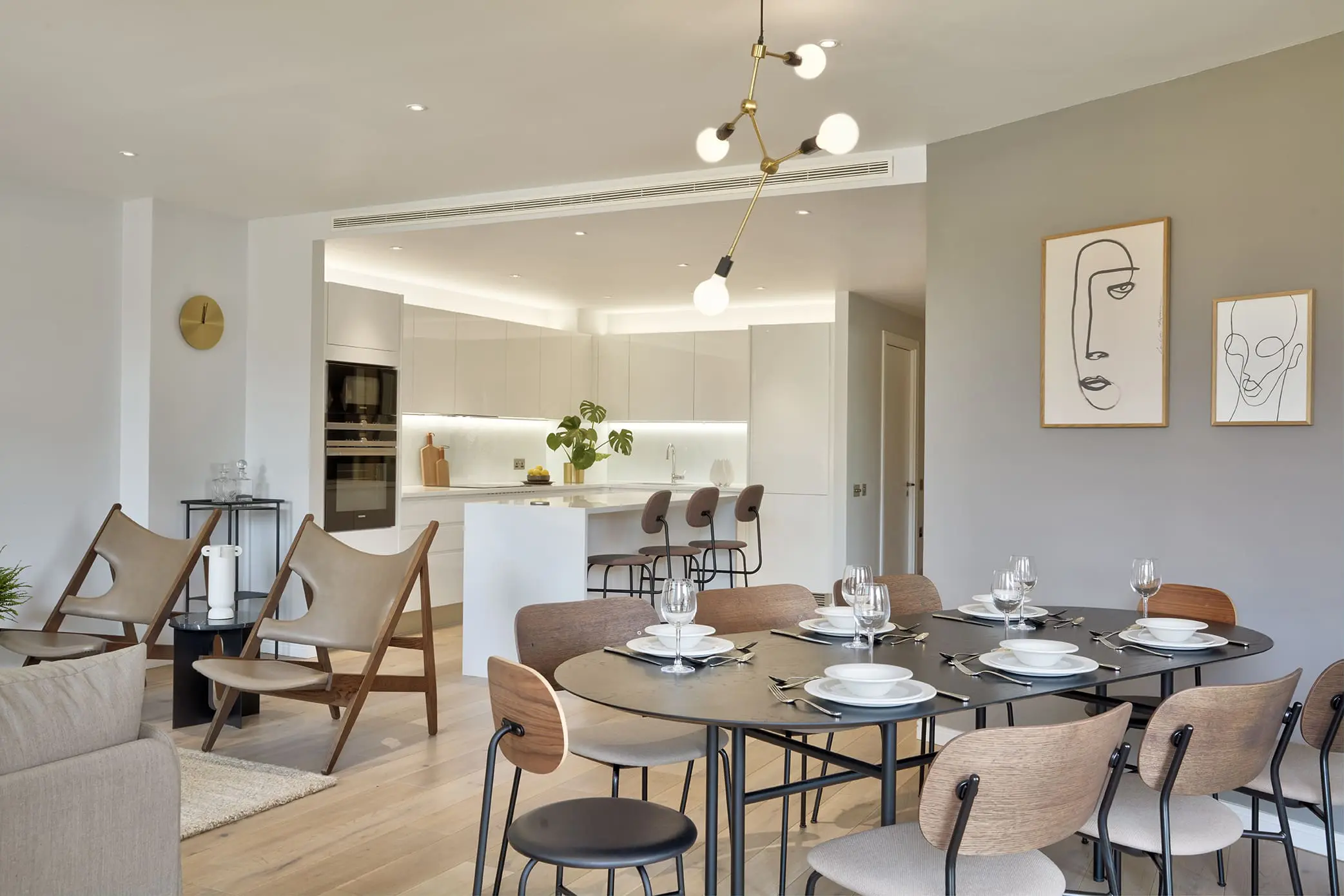
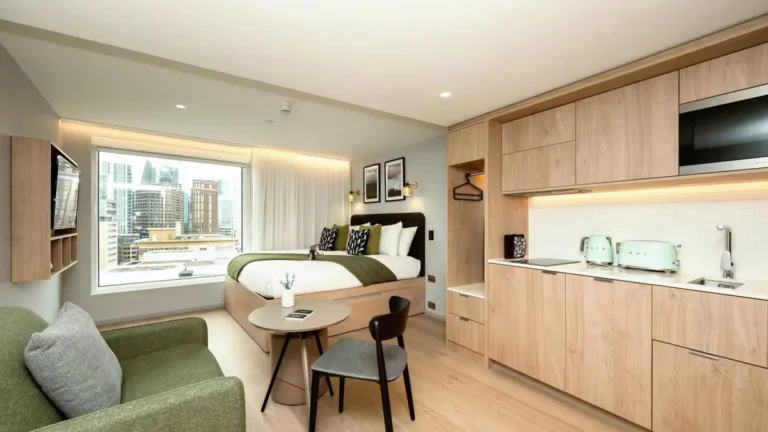
A serviced apartment is a fully furnished apartment available for both short-term rentals and long-term stays, combining the space and self-sufficiency of a private flat with hotel-style services. For students, the practical picture looks like this:
- Fully furnished apartments — bed, sofa, dining table, wardrobe storage, TV and a complete equipped kitchen. You arrive with your suitcase and the apartment is move-in ready accommodation from day one.
- Utilities included — electricity, gas, water and council tax are bundled into one rate. There are no accounts to set up and no surprise bills.
- WiFi included — high-speed internet is standard, essential for online lectures, research and staying in touch with home.
- Kitchen facilities — a private kitchen with hob, oven or microwave, fridge-freezer, cookware and crockery, so you can cook your own meals rather than relying on eating out.
- Laundry facilities — most serviced apartments include an in-apartment washing machine or on-site laundry.
- Housekeeping services — typically weekly cleaning with fresh linen and towels, though frequency varies by provider.
- Flexible lengths of stay — from a few nights to a full academic year, with monthly student accommodation rates that improve significantly for extended stays.
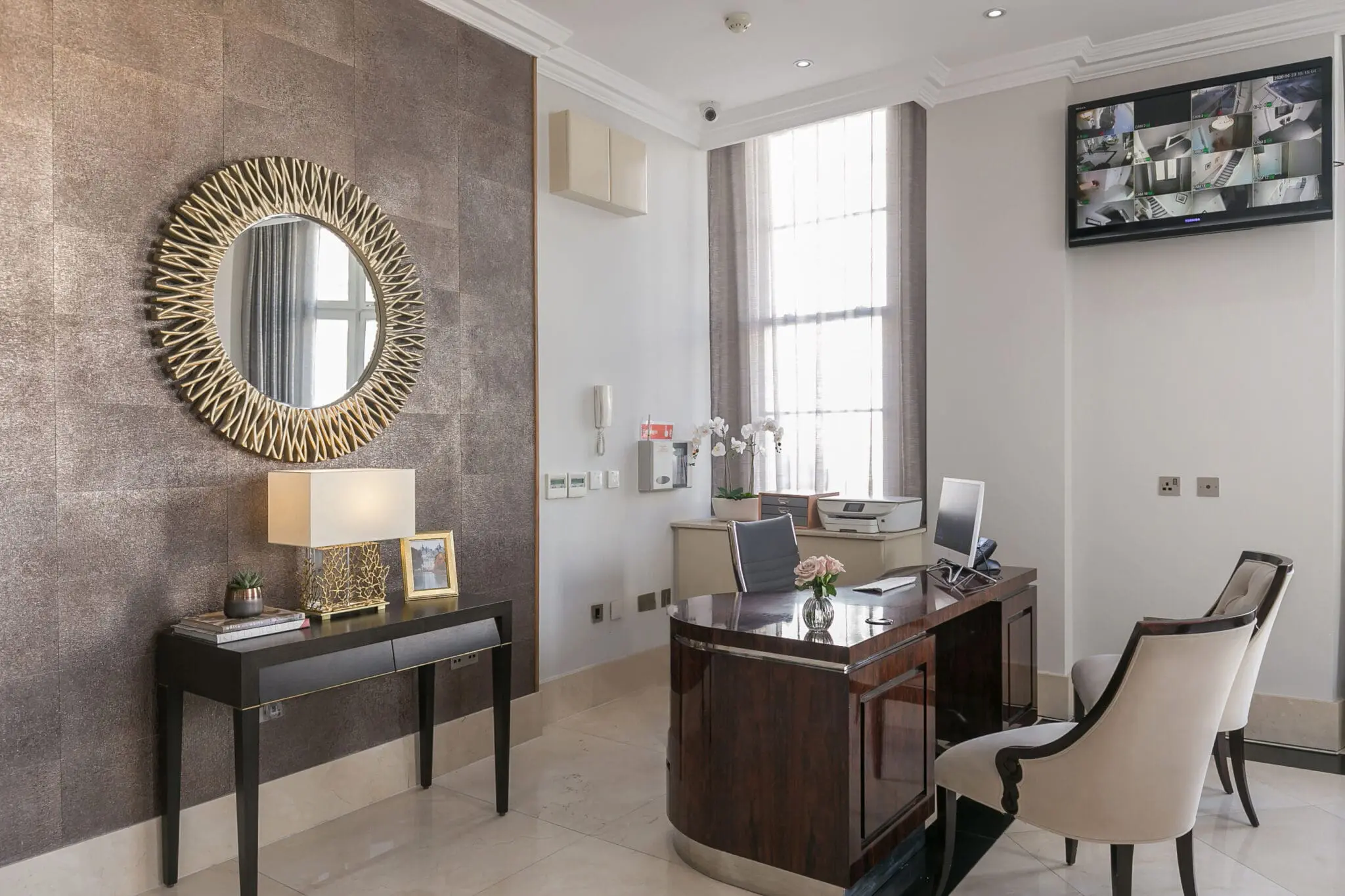
- Security — staffed receptions or secure entry systems, CCTV and 24/7 guest support are common.
How Serviced Apartments Differ from Hotels, Student Residences and Private Rentals
It helps to position serviced apartments against the alternatives:
| Hotel | Student residence (PBSA/halls) | Private rental | Serviced apartment | |
|---|---|---|---|---|
| Kitchen | Rarely | Often shared | Yes | Yes, private |
| Furnished | Yes | Yes | Usually not | Yes, fully |
| Bills included | Yes | Yes | No | Yes |
| Housekeeping | Daily | No | No | Usually weekly |
| Minimum stay | 1 night | Full academic year | 12 months typical | Flexible (nights to months) |
| Deposit/referencing | No | Sometimes | Yes, plus guarantor | Minimal |
| Space | Single room | Single room/studio | Whole flat | Whole apartment (studio to 3-bed) |
| Cost for long stays | Very high | Moderate | Moderate + setup costs | Moderate with long-stay rates |
In short: a serviced apartment gives you more space and independence than a hotel, more privacy and flexibility than a student residence, and far less administrative friction than a private rental — no UK guarantor, no utility setup, no furniture to buy.

Student Housing vs Serviced Apartments: Side-by-Side Comparison
Here is how the two options compare across the factors that matter most to students and parents:
| Factor | Traditional Student Housing | Serviced Apartments |
|---|---|---|
| Privacy | Shared kitchens/bathrooms common; en-suites at a premium | Entirely private apartment with own kitchen and bathroom |
| Cost | Lower headline rents, especially for shared rooms; bills included | Higher headline rate, but all-inclusive; long-stay discounts narrow the gap |
| Length of stay | Fixed 44–51 week contracts aligned to the academic year | Fully flexible — days, weeks, a semester, or a year |
| Flexibility | Limited; early-termination usually requires finding a replacement tenant | Extend, shorten or adjust dates far more easily; flexible booking terms |
| Location options | Clustered near campuses and in student-dense areas | Across central London — Kensington, Westminster, Canary Wharf, King’s Cross and more |
| Facilities | Communal amenities (gyms, study rooms, social spaces) | Private kitchen, laundry, workspace; housekeeping included |
| Study environment | Social and sometimes noisy, especially in first-year halls | Quiet, private and controllable — ideal for intensive programmes |
| Safety and security | Secure entry, wardens or on-site teams | Secure accommodation with controlled access, CCTV, often staffed reception |
| Visitor policies | Often restricted; overnight guests limited | Guests generally welcome within occupancy limits; parents can visit or stay |
| Family accommodation | Rarely available; almost never suitable for children | One-, two- and three-bedroom apartments accommodate partners and children |
| Group accommodation | Individual room contracts | Cohorts or friends can book multiple apartments in one building |
| Booking process | Applications, deadlines, waiting lists, sometimes guarantors | Simple reservation — often confirmed within hours, no UK guarantor needed |
The pattern is clear: student housing optimises for community and budget; serviced apartments optimise for privacy, flexibility and immediacy. Which matters more depends entirely on your situation.
When Student Accommodation Is Fully Booked
Every year, thousands of students discover that the accommodation they assumed would be available simply is not. The pinch points are predictable:
- September intake pressures. The main autumn intake places enormous strain on London student accommodation. Universities prioritise first-year undergraduates who applied by deadline; everyone else — postgraduates, returning students, late confirmations through Clearing — competes for what remains. By August, many PBSA buildings near popular universities are fully booked.
- January intake shortages. A growing number of programmes start in January, but most student housing contracts began in September and run through summer. Mid-year availability is thin, and what exists is often the least desirable stock.
- Exchange programme demand. Exchange students and visiting students typically need accommodation for one semester — roughly four to five months. Most student residences will not split their academic-year contracts, leaving exchange students with few formal options.
- Late admissions. Visa delays, Clearing offers, deferred decisions and last-minute programme changes all produce students who need somewhere to live within days, not months.
In each of these scenarios, serviced apartments solve the core problem: immediate availability with no fixed academic calendar. A student who receives a late offer in early September can book a fully furnished apartment the same week, move in with a suitcase, and either stay for the year or use the apartment as a comfortable, secure base while arranging longer-term housing. There are no waiting lists, no 51-week minimums, and no requirement to have planned eight months ahead.

Why International Students Often Choose Serviced Apartments
Accommodation for international students in London involves complications that home students rarely face — and serviced apartments address most of them directly.
Arriving before term starts
Many international students land in London one to three weeks early to settle in, open bank accounts, register with the police or NHS, and adjust to the time zone. Student residences usually will not release rooms before the contract start date. A serviced apartment covers that gap seamlessly — and can simply continue as your term-time home.
Visa processing delays
Visa timelines are unpredictable. Committing to a 51-week student housing contract before your visa is confirmed is risky; many students have lost deposits this way. Flexible booking terms on serviced apartments mean you can confirm accommodation once your visa is granted, or book with more forgiving cancellation policies.
Accommodation uncertainty
Booking a flat you have never seen, in a city you have never visited, from thousands of miles away is daunting. Serviced apartment providers are established businesses with professional standards, photography that matches reality, and accountable management — a meaningful reassurance compared with navigating private listings and the risk of rental scams targeting overseas students.
Relocation support
Reception teams, 24/7 contact lines and English-speaking staff make the first weeks dramatically easier. Practical questions — how council tax works, where the nearest supermarket is, how to top up an Oyster card — have an answer on hand.
Safety considerations
For parents arranging accommodation for a son or daughter moving abroad, security is often the deciding factor. Secure entry, CCTV, on-site or on-call staff and professionally managed buildings provide peace of mind that a private flat-share cannot match.
No UK guarantor required
Private landlords typically demand a UK-based guarantor or six to twelve months’ rent upfront from international tenants. Serviced apartments require neither — a simple booking and payment, much like a hotel.

Ideal Student Profiles for Serviced Apartments
Serviced apartments are not for everyone — a first-year undergraduate seeking the classic halls experience should usually choose halls. But for several student profiles, serviced apartments are arguably the better default.
Study abroad students
Semester abroad accommodation in London is notoriously difficult to arrange because the dates fit nothing: a typical semester runs three to five months, falling between hotel territory and the 12-month rental market. Serviced apartments are built for exactly this duration, with monthly rates, all bills included, and no penalty for an unusual start or end date. Study abroad coordinators arranging study abroad housing in London for whole cohorts often block-book apartments in a single building, keeping students together while giving each their own private space.
Law students
Short-term legal programmes are a London staple — international law exchanges, summer law schools and overseas campuses of US law schools. The Pepperdine Caruso School of Law London Programme is a well-known example: students spend a semester studying in London, often combined with internships at chambers or firms. Law school accommodation in London for these programmes needs to be close to legal London (Holborn, Temple, Bloomsbury), quiet enough for serious study, and bookable for precise programme dates. Serviced apartments tick every box, and the professional environment suits students who are, in many cases, already qualified professionals.
MBA and executive education students
London Business School, Imperial College Business School, Bayes and LSE run intensive MBA modules and executive education programmes lasting anywhere from one week to several months. Participants are typically mid-career professionals — sometimes accompanied by partners — for whom a student hall is simply not appropriate. A serviced apartment near campus offers a hotel-grade stay with the space to work, cook and live normally.
Postgraduate students
Postgraduate student accommodation is the most under-served segment of the London market: universities prioritise undergraduates, yet master’s and PhD students often have non-standard timelines — research placements, fieldwork gaps, internships, viva preparation periods. Serviced apartments accommodate a four-month research placement or a nine-month master’s dissertation period without forcing a 12-month commitment.
Students relocating with family
Students moving to London with a partner or children have almost no options within traditional student housing. Two- and three-bedroom serviced apartments provide genuine family accommodation: separate bedrooms, a full kitchen, laundry, and locations near schools and parks as well as universities.
Mature students
Students returning to education in their late twenties, thirties or beyond frequently report that halls feel like a poor fit. A quiet, private, professionally managed apartment supports the lifestyle of someone balancing study with work, family responsibilities or simply a preference for calm.
Cost Comparison: Are Serviced Apartments More Expensive?
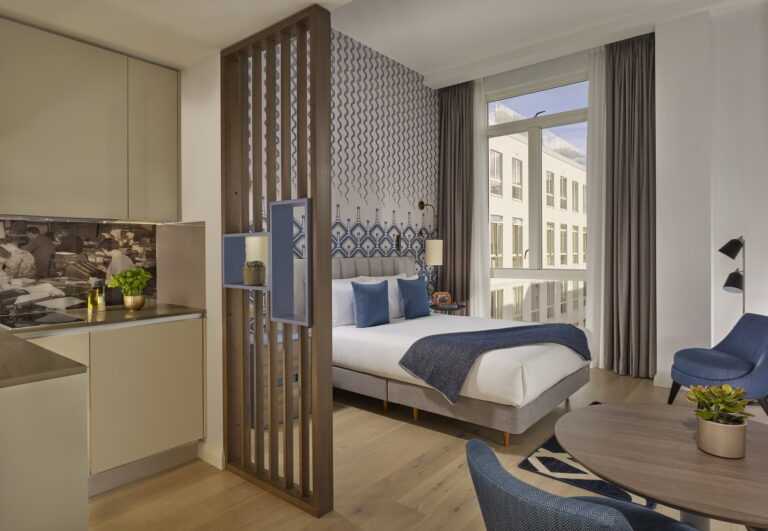
The honest answer: on headline rent, usually yes; on total cost of living, often closer than you think — and sometimes better value. A fair comparison has to account for everything a student actually spends:
Utility bills
In a private rental, electricity, gas, water and (where applicable) council tax can add £150–£250+ per month. In a serviced apartment, utilities are included in the rate. Full-time students are generally exempt from council tax, but in private rentals the exemption paperwork falls to you; in all-inclusive accommodation in London it is simply not your problem.
Internet
Setting up broadband in a private rental means a 12–18 month contract, installation delays of two to four weeks, and £25–£40 per month. WiFi included from the moment you arrive is worth more than its line-item price, particularly for short stays where a broadband contract is impossible anyway.
Furnishing costs
Unfurnished private rentals require beds, desks, sofas, kitchenware — easily £1,000–£2,500 even buying second-hand, plus the hassle of disposal when you leave. Fully furnished apartments eliminate this entirely.
Laundry
PBSA launderettes commonly charge £3–£6 per wash-and-dry cycle. An in-apartment washing machine saves both money and Sunday afternoons.
Cleaning
Weekly housekeeping, included in most serviced apartment rates, would cost £60–£100+ per month if purchased separately.
Deposits and fees
Private rentals require a five-week deposit (often £1,500–£3,000 in London) tied up for the duration, plus potential guarantor-service fees for international students (typically a percentage of annual rent). Serviced apartments require little or none of this.
Transportation savings
Serviced apartments in central locations — Bloomsbury, South Kensington, Westminster — can put you within walking distance of campus, eliminating a £100–£170 monthly travelcard that students in cheaper outer-zone housing must pay.
Cooking versus eating out
Compared with a hotel stay (the realistic alternative for short programmes), a full kitchen transforms the budget. Cooking most meals instead of eating out can save £300–£600 per month in London.
Paying only for what you use
Perhaps the biggest hidden saving: a student on a four-month programme forced into a 51-week PBSA contract pays for roughly seven months of empty room. A serviced apartment priced higher per week but booked for exactly 17 weeks can cost substantially less overall.
Where student housing wins on cost
- Full academic year stays
- Shared rooms, and
- Students for whom the communal amenities replace paid alternatives (gym memberships, study spaces).
- If you are staying September to June on a tight budget and secured a place early, PBSA or halls will usually be cheaper.
Where serviced apartments win on value
- Stays under six months
- Late bookings
- Couples or families sharing one apartment
- Central locations that eliminate commuting
- and any situation where the alternative is a hotel or an inflated last-minute private rental.

Best Areas in London for Students Seeking Serviced Apartments
Location shapes the entire student experience. These neighbourhoods combine strong serviced apartment availability with proximity to universities, transport and daily amenities.
Kensington
Elegant, safe and exceptionally well-connected, Kensington offers easy access to Imperial College and the Royal College of Music, with Hyde Park on the doorstep. Ideal for students (and parents) prioritising a secure, refined environment. The academic heart of west London — Imperial College, the Natural History Museum, the V&A and the French Lycée are all here. The District, Circle and Piccadilly lines connect directly to central campuses and Heathrow.
Hammersmith
Excellent value relative to its connectivity: four Tube lines, quick links to Imperial’s White City campus and central London, plus riverside walks and a major shopping centre. A practical base for budget-conscious students wanting more space.
Earl’s Court
Long a favourite with international visitors, Earl’s Court balances central access with quieter residential streets. Convenient for Imperial, Chelsea’s colleges and quick Piccadilly-line runs to Heathrow — useful for semester abroad students flying in and out.
Canary Wharf
Modern towers, river views and direct Jubilee line/Elizabeth line access. A natural fit for finance-focused MBA students, interns at the banks headquartered here, and students at the University of Greenwich or Queen Mary’s Mile End campus.
London Bridge
On the doorstep of King’s College London’s Guy’s Campus and LSE within easy reach. Borough Market, the South Bank and superb rail connections make this one of the most vibrant central options.
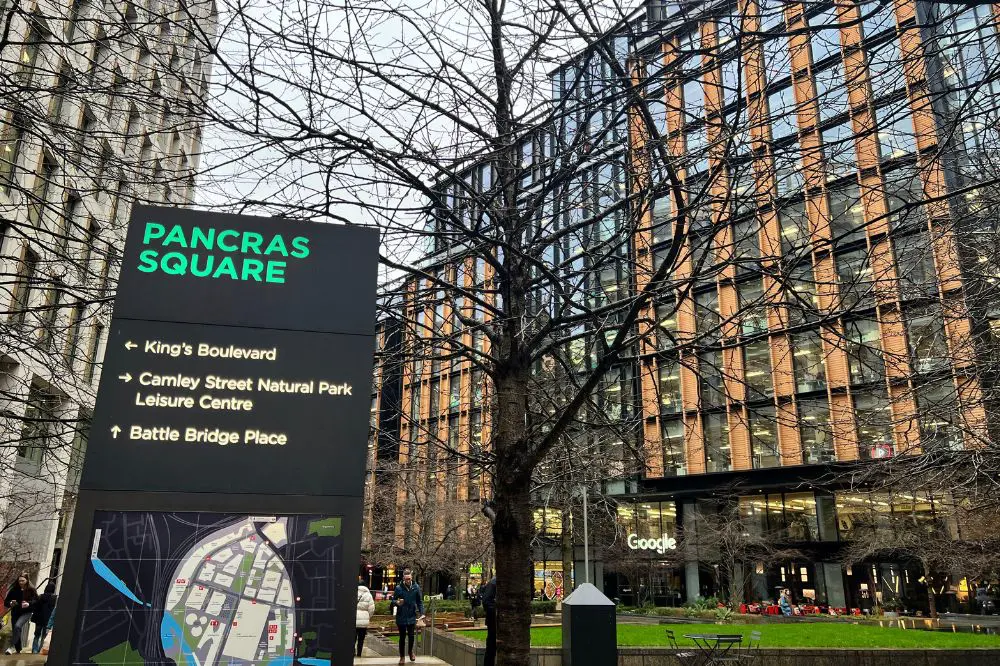
King’s Cross
Transformed over the past decade, King’s Cross hosts Central Saint Martins (UAL) and sits minutes from UCL, SOAS and Birkbeck. The Eurostar terminal and six Underground lines make it the best-connected spot in London.
Bloomsbury
The traditional university quarter — UCL, SOAS, Birkbeck, LSHTM and the British Museum are all within a few streets. For students who want to walk to lectures through Georgian squares, nothing beats it. Also the closest base for legal programmes around Holborn and the Inns of Court.
Westminster
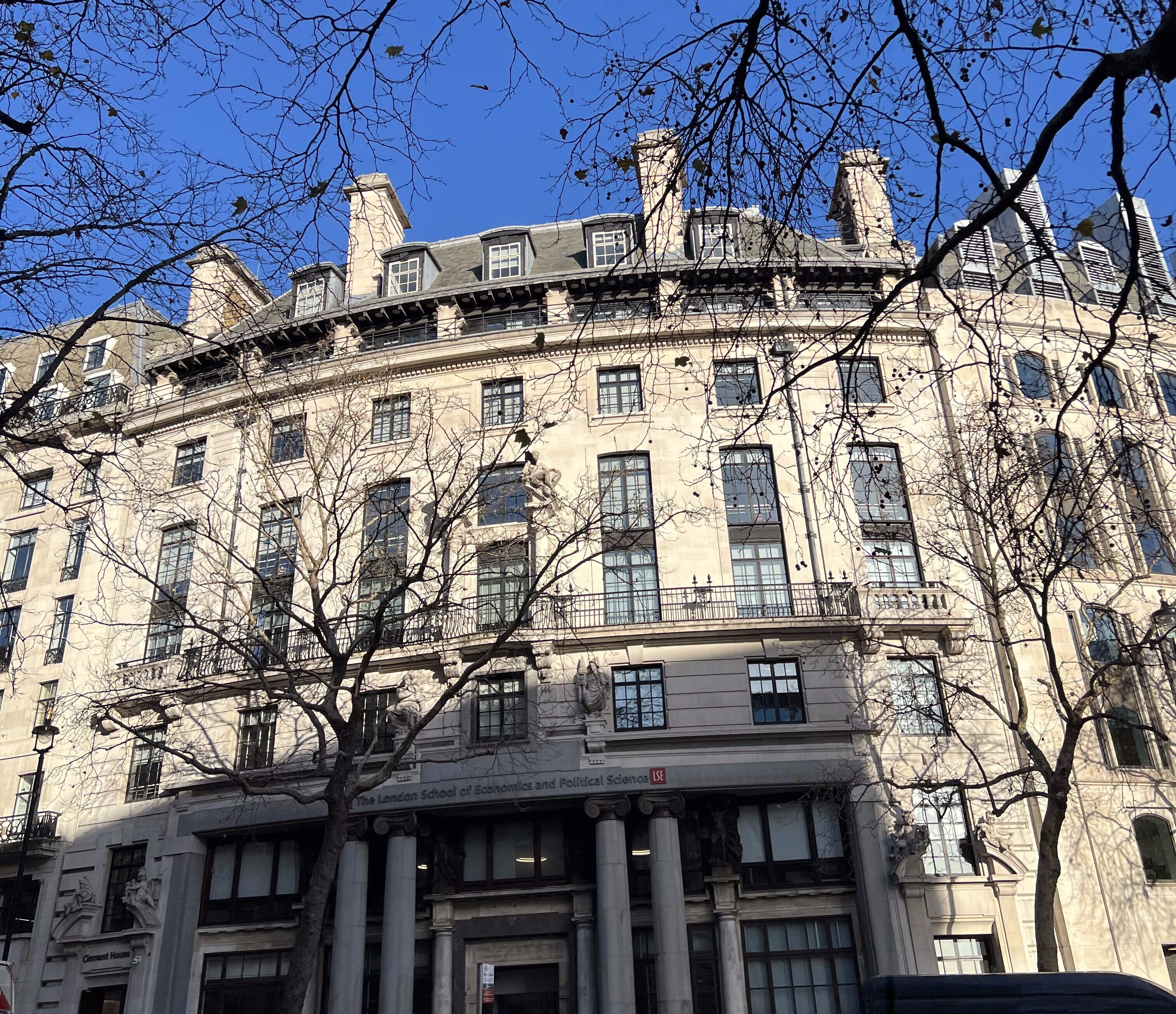
Home to the University of Westminster and a short walk from LSE and King’s Strand campus, with iconic surroundings and strong transport links. Popular with politics, law and policy students, including those interning in government or NGOs.
Stratford
East London’s regeneration success story: UCL East and Loughborough University London sit in the Olympic Park, Westfield provides every amenity, and the Elizabeth line reaches central London in minutes — all at more accessible price points than west London.
Questions Students Should Ask Before Booking Accommodation
Whichever route you choose, run through this checklist before committing:
- WiFi speed and reliability. Is internet included? What is the actual speed (ask for Mbps), and is it sufficient for video lectures and calls home?
- Study space. Is there a proper desk and chair in the room or apartment? Are there quiet hours or dedicated study areas?
- Included utilities. Exactly which bills are covered — electricity, gas, water, council tax, contents insurance? Are there fair-use caps?
- Security measures. Secure entry? CCTV? Staffed reception or 24/7 contact line? How are keys or access codes managed?
- Public transport access. Which Tube, rail or bus lines are nearby, and what is the realistic door-to-lecture journey time and monthly cost?
- Housekeeping. Is cleaning included, how often, and what does it cover? Are linen and towels provided and refreshed?
- Length of stay flexibility. Can you extend if your programme runs over? Can you leave early if plans change, and on what notice?
- Cancellation policies. What happens if your visa is delayed or refused, or your course is cancelled? Get the policy in writing before paying.
- Total cost. Ask for the all-in figure including any cleaning fees, deposits and payment surcharges — then compare like with like.
- Guest and family policies. Can parents stay when they visit? Can a partner live with you? What are the occupancy limits?

Frequently Asked Questions
- Can students stay in serviced apartments? Yes. Serviced apartments welcome students of all kinds, and many providers actively cater to academic stays — semester abroad cohorts, postgraduates, law and MBA programmes. There is no requirement to be a business traveller; you simply book for the dates you need.
- Are serviced apartments cheaper than student accommodation? For a full academic year in a shared residence, traditional student housing is usually cheaper on rent. But for stays under six months, late bookings, central locations or shared family apartments, the all-inclusive nature of serviced apartments — utilities, WiFi, furnishing, housekeeping, no deposit tied up, no wasted contract weeks — often makes them comparable or better value overall.
- Can international students rent serviced apartments in London? Yes, and it is one of the easiest options available to them. There is no UK guarantor requirement, no credit-history check and no need to pay a year’s rent upfront — common obstacles in the private rental market. A passport, booking confirmation and standard payment are typically all that is required.
- Are bills included in serviced apartments? Almost always. Electricity, gas, water, WiFi and housekeeping are bundled into the rate, and council tax is handled by the operator. Always confirm the specifics, but “all-inclusive” is the industry standard.
- How long can students stay in a serviced apartment? From a single night to a full academic year or longer. Rates typically improve at weekly and monthly thresholds, making extended stay accommodation in London surprisingly economical for multi-month bookings.
- Can parents stay with students in a serviced apartment? Yes — this is one of the biggest practical advantages. Parents helping a student settle in can stay in the apartment during arrival week, and visiting family can stay later in the year, subject only to the apartment’s occupancy limit. Most student residences prohibit or heavily restrict this.
- Are serviced apartments suitable for study abroad programmes? Ideally so. Programme dates rarely align with UK academic-year contracts, and serviced apartments handle three-, four- or five-month stays effortlessly. Universities and study abroad coordinators frequently arrange group bookings so an entire cohort stays in one building.
- Is a serviced apartment a good environment for studying? Generally excellent: a private, quiet space with a desk, fast WiFi and no flatmate noise. Students who want communal study energy can use university libraries by day and return to a calm apartment at night.
- Do serviced apartments require a deposit or guarantor? Policies vary, but most require no guarantor and either no deposit or a modest, quickly refunded one — a fraction of the five-week deposits standard in private rentals.
- What happens if my student accommodation falls through at the last minute? This is precisely the scenario serviced apartments solve best. Availability can usually be confirmed within hours, apartments are move-in ready, and you can book a few weeks while you regroup or commit for the full term — whichever suits.
- Can I cook my own meals? Yes. Every serviced apartment includes a private, fully equipped kitchen — a major saving compared with hotel stays or catered halls, and a comfort for students who prefer their own cuisine.
- Are serviced apartments safe for a student living alone in London for the first time? Serviced apartments are professionally managed buildings with secure entry, CCTV and staff support — among the safest accommodation formats available, which is why parents arranging accommodation often prefer them.

Conclusion
There is no single right answer in the student housing vs serviced apartments debate — only the right answer for your circumstances.
Traditional student housing remains the natural choice for first-year undergraduates seeking community, social life and university integration, and for budget-focused students staying the full academic year who secure their place early.
Serviced apartments are the stronger option when flexibility, privacy, immediacy or family needs come first: semester abroad and exchange students, law students on short programmes such as the Pepperdine Caruso School of Law London Programme, MBA and executive education participants, postgraduates on research placements and internships, mature students, families, and anyone who applied late or found university accommodation fully booked.
The key differences come down to this: student housing offers a built-in community on a fixed academic calendar; serviced apartments offer a private, fully furnished, all-inclusive home on your own calendar. As London’s student population continues to grow faster than its dedicated student housing supply, serviced apartments deserve a place on every student’s shortlist — not as a compromise, but as a genuinely attractive alternative offering greater flexibility, comfort, safety and availability exactly when traditional options run out.
Enquire Now
Looking for flexible student accommodation in London? Whether you’re studying abroad, attending a short-term academic programme, relocating for postgraduate study, or searching for an alternative when student housing is unavailable, our team can help you find fully furnished serviced apartments across London tailored to your academic journey.